An Embroidery Designer's Honest Review: My Mom Didn't Raise No Dummy
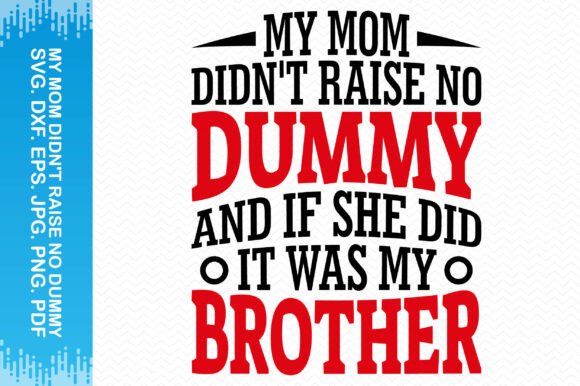
When a new design lands in my library, my first question isn't about file formats; it's about character. How will this translate from screen to stitches? I'm looking at My Mom Didn't Raise No Dummy Clipart today, and I’m considering it from the perspective of a crafter prepping a batch of embroidered tote bags for a local boutique. This isn't a generic review—it's a practical design judgment.
The Immediate Personality and Project Potential
First impressions matter, both for you and your customer. This design immediately communicates a playful, confident, and slightly cheeky mood. The phrase itself is a statement, and the clipart style suggests a straightforward, friendly execution. The layout feels balanced, with the text likely taking center stage supported by illustrative elements. This isn't a overly intricate, formal piece; it's a design with personality meant to spark a smile or a nod of agreement.
For a real project, like those boutique tote bags, this translates into a product with instant relatability. It naturally belongs to projects that are personal, gift-oriented, or meant for lighthearted everyday use. Think customized sweatshirts for a mom's group, aprons for a fun kitchen, pillow covers for a cozy living space, or baby items like a keepsake blanket with a humorous twist. The visual personality leans toward casual, conversational crafts, making it a strong candidate for personalized gifts and small shop merchandise where connection matters.
Performance Across Real Embroidery Scenarios
Let's move from potential to practice. How does My Mom Didn't Raise No Dummy Clipart hold up when the needle starts moving?
On custom apparel like t-shirts and sweatshirts, this design should offer good stitching clarity if the details are well-defined in the file. The message is the star, so legibility is key. For a embroidered patch, it could become a standout item, especially if applied to denim jackets or bags. As a tote bag design, it provides that perfect blend of function and statement—a bag that carries your groceries and your attitude.
In the realm of baby embroidery or nursery decor, used thoughtfully on the border of a blanket or a wall hanging, it adds a touch of modern, humorous parenting style. For holiday gifts—say, a kitchen towel for a sister who's a great cook—it becomes a personalized hit. In a craft business context, this design can fill a niche in your Etsy listings or craft fair products, appealing to customers looking for something genuinely witty rather than overly sentimental.
Where to Exercise a Bit of Caution
Every design has its ideal applications and its trickier ones. With a phrase-based graphics file like this, pay close attention to small details. If the design includes tiny lettering or very dense decorative accents, it might struggle on small hoop sizes or on textured fabrics like some sweaters. Stretchy fabric requires excellent stabilizer to keep the text crisp.
Consider the fabric background carefully. On dark fabric, you'll need to plan thread color contrast strategically—a white or bright satin stitch for the text might be essential. Applying it to curved surfaces like caps demands testing to ensure the longer text layout accommodates the curvature without distortion. For products destined for frequent washing, like everyday sweatshirts, a robust stitch density will be important for longevity. Always, always test on scrap fabric first.
The Impact on Your Work and Your Customer
Using a design like this isn't just about the stitch; it's about the final product's appeal and value. A well-embroidered version of My Mom Didn't Raise No Dummy Clipart enhances visual appeal through its clear, confident message. Stitching clarity directly affects customer trust—a crisp, professional finish makes a handmade product feel premium.
For small business owners and apparel decorators, this design can contribute to brand consistency if your shop specializes in humorous, contemporary gifts. Its giftability is high; it feels like a specific message for a specific person. That boosts buyer engagement. From a professionalism standpoint, successfully executing a text-heavy design shows skill, increasing the perceived value of your finished product.
Practical Notes From the Hoop
Before you load this embroidery file and start production, here are my grounded recommendations. Since the provided information notes SVG and DXF formats suitable for cutting machines, remember that for machine embroidery design, you will typically need to convert or use a compatible format. Confirm your machine compatibility and the required file type before use.
- Test the design on scrap fabric first. This is non-negotiable. Check the stitch density, especially in any fill stitch areas.
- Review thread color contrast against both light and dark fabric backgrounds. Compare it in black and white mockups to gauge contrast.
- Inspect small details in the clipart elements. Will they remain clear after a running stitch or satin stitch?
- Confirm your hoop size can accommodate the entire design without needing excessive resizing, which can affect quality.
- Use the proper stabilizer for your chosen fabric texture—this is critical for text clarity.
- Check whether the design's licensing allows for both personal and commercial projects before selling finished items or incorporating it into your digital product previews.
Applying this to a real scenario: imagine embroidering it on a canvas tote. You'd want a sturdy stabilizer, a thread color that pops against the natural canvas, and perhaps a slight reduction if the design is too large for your bag's panel. The result should be a clean, witty product that stands out at your boutique or in your Etsy shop.
A Design That Speaks for Itself
Ultimately, My Mom Didn't Raise No Dummy Clipart is more than a digital asset; it's a conversation starter stitched into fabric. Its value lies in its directness and personality. For embroidery designers and creative entrepreneurs, it offers a path to create products with instant emotional resonance. It fits seamlessly into the world of personalized gifts, small shop merchandise, and craft business items where a little humor goes a long way.
Approach it with a practical eye: respect its requirements for clarity and contrast, choose your projects wisely, and it will reward you with a finished piece that feels authentic and engaging. That’s the goal—moving from a file in a ZIP folder to a real, stitched product that someone loves, uses, and connects with. That’s the real test of any embroidery design, and this one has the character to pass it.