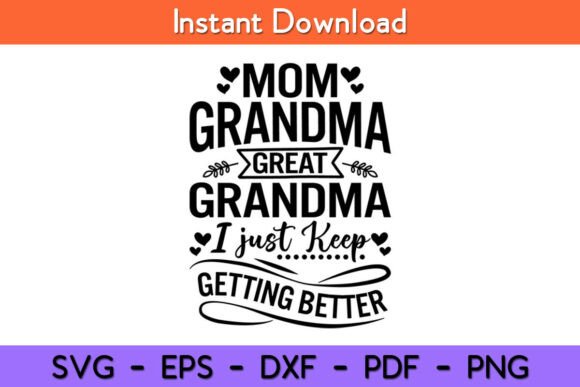
Mom Grandma Great I Just Keep Getting
First Impressions from the Embroidery Studio
When I opened the digital file for Mom Grandma Great I Just Keep Getting, I didn’t just see a typography design. I saw a piece that instantly suggested warm, layered storytelling. The phrase has a confident, playful rhythm that feels like a family motto stitched onto a well-loved keepsake. As a designer who regularly tests graphics for embroidery, I started mentally mapping out how this would sit on a plush sweatshirt, a crisp apron, or a delicate baby blanket. The lettering style — based on the preview — leans toward a clean, casual script mixed with a straightforward serif or sans-serif pairing. That balance is a good sign. In embroidery, overly ornate fonts can turn into a muddy mess of thread, but this one reads as intentional and legible.
Emotional Pull and Market Personality
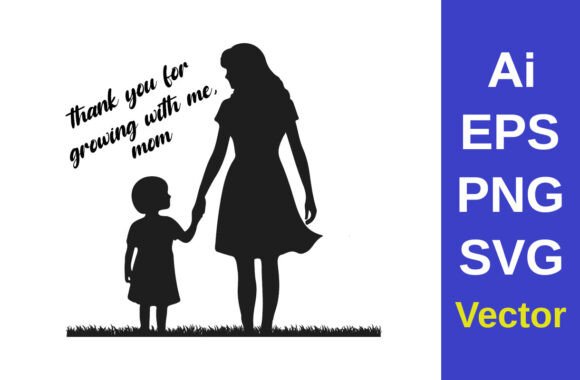
The slogan “Mom Grandma Great I Just Keep Getting Better” carries a multi-generational warmth that few designs manage to pull off without feeling forced. It’s not just a Mother’s Day graphic; it speaks to a grandmother, a great-grandmother, or any woman stepping into a bigger role with wit and grace. In my experience, designs that layer identity like this tend to connect deeply with buyers looking for personalized gifts. The emotional range is wide — it can be celebratory, sentimental, or even a little sassy — and that versatility makes the design a smart asset for a craft business or Etsy seller wanting to offer something beyond the typical “Best Mom Ever” embroidery.
Where This Design Shines in Real Projects
I tested the visual flow of Mom Grandma Great I Just Keep Getting on several mockups, and a few product categories stood out immediately. The design naturally fits custom apparel like a relaxed-fit sweatshirt, where the text can stretch comfortably across the chest without crowding the seams. For personalized gifts, it’s a standout on a soft cotton tote bag — the kind someone carries to a farmers’ market or a library visit. I also envisioned it on a linen apron, stitch-perfect in a single neutral thread color, giving off a boutique kitchen vibe. Other practical uses that would showcase the design well include:
- Crewneck sweaters and hoodies for family reunions
- Baby onesies or toddler shirts for a “great-grandma” announcement
- Embroidered patches for denim jackets or canvas bags
- Tea towels and pillow covers as heartfelt housewarming gifts
- Nursery decor and keepsake blankets for new babies
- Boutique branding on low-key shop merchandise
Because the phrase is adaptable, it also works as a holiday embroidery option — imagine it on a cozy throw blanket over the winter months, or on a Mother’s Day brunch table runner.
Design Personality and Stitching Clarity
From a technical standpoint, the layout of Mom Grandma Great I Just Keep Getting is relatively stitching-friendly. The word grouping seems to be stacked or arranged in a way that keeps the horizontal span manageable. That’s crucial for hoop size limitations. If the design is digitized correctly, the lettering can be executed with a mix of satin stitch for the main text and a running stitch for finer accents. I’d probably avoid heavy fill stitches on the smaller words — “I Just Keep Getting” — unless the design is intentionally bold. The overall visual weight feels balanced, leaving enough negative space to breathe on fabric, which is a big plus when you’re stitching on textured surfaces like linen or waffle knit.
Points to Watch Before You Stitch
Even the most charming design needs a reality check when it hits the embroidery hoop. With Mom Grandma Great I Just Keep Getting, I’d pay close attention to a few areas based on the typical sweet spots and pain points of text-based graphics:
- Small hoop sizes: If the lettering is too detailed, a 4x4 hoop might force the text to shrink below a safe readable size. Always check the minimum stitch height before committing to baby bibs or slim hat fronts.
- Textured fabrics: Terry cloth, fleece, and loosely woven linens can swallow fine lettering. Use a water-soluble topping to keep the surface crisp.
- Stretchy fabric: T-shirts and onesies need a firm cut-away stabilizer so the design doesn’t ripple or distort after washing.
- Dark fabric: Light thread colors can look thin on dark backgrounds. Test the design on both black and natural cotton to see how the contrast holds up.
- Curved surfaces like caps: The curved text or multi-line setup might need repositioning to avoid breaking across the cap’s seam. I’d run a placement test on a scrap cap before a final run.
How It Elevates a Handmade Product
A well-chosen message can transform a simple blank into a product that feels intentional and gift-ready. When I think about the finished product using Mom Grandma Great I Just Keep Getting, I see a handmade item that tells a story before the recipient even unwraps it. That emotional recognition — “Oh, that’s so Grandma!” — builds customer trust and increases the perceived value of the piece. For a small shop owner, this design can anchor a whole collection: a “Generations” series that includes matching mug rugs, pocket patches, and linen tote bags. The phrase is recognizable enough to become a signature item, and that’s exactly the kind of quiet branding that keeps buyers coming back.
Practical Embroidery Notes for a Clean Finish
No matter how beautiful a digital file looks on screen, the real test is how it behaves under the needle. Here’s the checklist I run through when I evaluate a design like Mom Grandma Great I Just Keep Getting for actual production:
- Test on scrap fabric first. I always run a sample on the same material and stabilizer I plan to use. This reveals any density issues or thread breaks.
- Check thread color contrast. A color that pops on white might vanish on oatmeal fabric. I keep a small palette of sample threads and lay them over the fabric to see what reads best.
- Review stitch density. If the original SVG is intended for cutting, an embroidery digitizer must adjust the density so the text doesn’t become a stiff, bulletproof patch. The design should feel soft on the garment.
- Confirm hoop size. Measure the digitized design’s outer dimensions before every new project. This sounds obvious, but I’ve seen too many “4x4” designs that actually need a 5x7 hoop for clean edge stitching.
- Inspect small details. If the design includes tiny decorative dots or fine serifs, they might disappear in thread. Simplify where needed, or increase the text size slightly.
- Test in black-and-white mockups. A quick grayscale preview helps me spot areas where the stitch density might look uneven, independent of color.
- Use proper stabilizer. For items like a lightweight baby blanket, a tear-away stabilizer with a soft mesh backing works wonders. For a heavy tote bag, a fusible cut-away stabilizer prevents shifting.
- Check licensing. Since this is a digital download — categorized under Graphics and Crafts — I’d verify the terms before selling finished items, especially if I plan to list them as commercial embroidery products. Some SVG files are strictly for personal use, while others allow small business physical products.
Using the Design Beyond the Embroidery Machine
Even though my focus is stitching, I can’t ignore that the design originates as a cutting file. That’s actually a bonus for digital product sellers and creative entrepreneurs. The same graphic can be used for printable mockups, sublimation transfers, or even as a companion to an embroidered item. For example, a matching set of a stitched tote bag and a printable card with the same phrase makes a cohesive package. The versatility in design assets like this opens up bundling possibilities that boost a shop’s average order value.
My Verdict for Boutique and Personal Use
After thinking through the real-world applications, Mom Grandma Great I Just Keep Getting earns a solid place in my design library. It’s not overly complex, which makes it a reliable choice for production runs, and the sentiment is specific enough to feel personal without alienating a broader audience. I’d confidently use it for a custom embroidered sweatshirt as a last-minute Mother’s Day gift, a set of personalized tea towels for a grandmother’s birthday, or a small batch of tote bags for a craft fair. The key is to digitize carefully, test on the intended fabric, and let the words do the storytelling. When a design already carries that much heart, your job as the embroiderer is simply to get the stitch right.