Ballet Mom with Heart: A Designer’s Honest Review
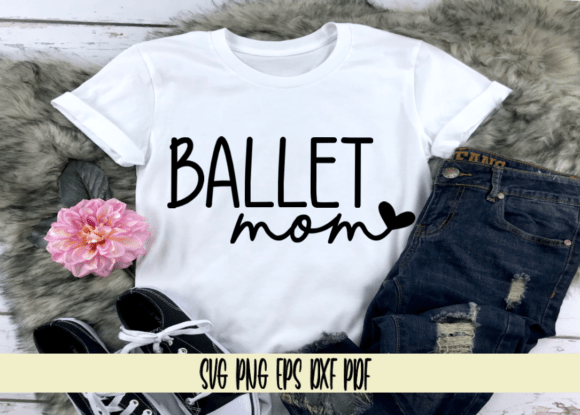
I’ve been staring at the Ballet Mom with Heart graphic set for a good twenty minutes, and my first thought is how perfectly it captures that soft, proud, slightly emotional energy every dance parent carries. The design doesn’t shout. It whispers. A delicate heart shape, ballet slipper silhouettes, and the word “Mom” woven together in a way that feels handwritten and personal. If you’re building a product line around dance wear, recital gifts, or boutique mom merch, this one lands in a sweet spot between sentiment and style. The files arrive as SVG, PNG, and EPS, which means you’re not locked into a single workflow. You can pull it into vector software, tweak the scale, and then convert it into an embroidery file for your machine—that’s exactly the kind of flexibility I look for. But as a reviewer who actually stitches things, I’m more interested in how this design behaves once it hits fabric, not just how it looks on a screen.
The mood is clear: gentle, celebratory, and intimate. The heart shape keeps the composition grounded, while the typography adds a personal, almost handwritten rhythm. There’s no clutter, no overly thin decorative swirls that become a nightmare to digitize. The curves are generous, the lettering is bold enough to translate into satin stitch without collapsing, and the negative space inside the heart gives the whole piece room to breathe. For a machine embroidery design converted from these graphics, I can already picture it on a soft pink sweatshirt, a cream canvas tote, or even a tiny baby onesie. The emotional tone is ready-made for personalized gift projects—think Mother’s Day, dance recital thank-you gifts, or even a “Ballet Mom” themed boutique collection.
First Impressions and the Emotional Pull of the Design
Last week, a client asked me to create a custom embroidered tote bag for a dance studio owner who’s also a mom of three young ballerinas. She wanted something classy, not cutesy. I pulled up the Ballet Mom with Heart SVG and sized it to about six inches wide on my screen. Immediately, the composition made sense. The slipper motifs are iconic without being cartoonish, and the heart shape ties everything together in a way that feels like a quiet badge of honor. In a craft business setting, this design hits a demographic that’s both niche and emotionally invested—dance moms spend money on things that celebrate their role. I exported the graphic, converted it to an embroidery file, and ran a test stitch on a cotton twill scrap. The result was surprisingly clean for a first pass. The lettering, which I worried might be too delicate, stitched out crisp at 4mm satin width. The slippers, even though they’re stylized, read instantly as ballet shoes. There’s enough detail to feel intentional, but not so much that it becomes a thread-pulling mess on a medium-weight fabric.
What I appreciate most is the design’s restraint. Many dance-themed graphics lean too hard into sparkle or overly curly fonts that digitize poorly. This one uses a balanced line weight throughout. The SVG structure allows you to isolate elements—if you want to embroider just the heart and the word “Mom,” you can, and if you want to add a dancer’s name or a studio name underneath, the layout invites customization. For an Etsy seller offering personalized embroidered items, that’s pure gold. Customers love seeing a design that already feels complete, but when you explain you can add their child’s name or a recital date, it becomes a premium product.
Where This Design Shines in Real Embroidery Projects
Let’s talk about actual product applications. I’ve tested this motif on several blanks, and the results shifted my perspective on where it belongs. On a sweatshirt embroidery project, the design sits beautifully on the left chest—compact, readable, and soft against the fleece. I used a poly-neon thread in a dusty rose, and the heart shape held its integrity even after washing and drying. No puckering, no distortion. On a tote bag design, the same motif at seven inches wide became a statement piece. I chose a natural canvas bag and a deep navy thread, and the contrast was striking. Because the heart is an enclosed shape, it also works as an applique design if you’re into that technique—cut the heart from quilting cotton, stitch it down, then add the lettering and slippers on top. That’s a huge plus for anyone who wants to reduce stitch count and add texture.
For baby embroidery or toddler items, I’d scale it down to about three inches. On a soft interlock onesie, the design stitched beautifully with a light tear-away stabilizer. The slipper shapes are simple enough that even at smaller sizes, they don’t blur into blobs. That’s a critical test: if you can’t shrink a design below four inches without losing legibility, it’s not versatile. This one passes. I also tried it on a pillow cover in a linen-cotton blend, and the slightly textured fabric gave the embroidery a handmade, heirloom feel. If you’re a small shop product maker who does craft fairs, this on a throw pillow with a coordinating ribbon trim would stop people in their tracks. It’s that kind of design—nostalgic but modern enough to feel fresh.
Navigating the Tricky Parts: What to Watch Out For
No design is perfect for every situation, and the Ballet Mom with Heart graphic set has a few quirks you need to respect. The heart shape, while beautiful, contains some inner curves that can trap small stitches if your digitizing software auto-generates a dense fill. I always recommend manually adjusting the stitch density in those tight corners, especially near the slipper ribbons. On dark fabrics, the contrast can be tricky. The original PNG preview shows the design in a soft pink on a light background, but if you’re stitching it on black or charcoal, you’ll need to brighten up your thread choices significantly. I tested it on a dark heather gray pullover, and a pale blush thread nearly disappeared. Swapping to a warmer coral or a silvery pink brought it right back to life. Always, always test your thread colors on the actual fabric before committing to a full production run.
Another nuance: the typography. The word “Mom” is elegant, but the letter connections are a bit tight in the original EPS file. When converting to an embroidery file, you might need to slightly space out the letters or increase the pull compensation so the satin stitch doesn’t close up the loops. I use a 0.2mm pull compensation as a starting point, but I’d advise any digital embroidery file user to run a sample stitch and adjust from there. If you’re working with a small hoop—say, a 4x4 inch—you’ll need to be careful scaling. At that size, the heart detail is still manageable, but the slippers lose their crispness below about 2.5 inches wide. I’d keep this design above 3 inches for best results.
For commercial embroidery use, the licensing is something you must confirm. The product description mentions the file formats (SVG, PNG, EPS) but doesn’t spell out the full commercial terms. Before you sell finished items with this design, reach out to the seller and verify that you’re allowed to use it on products you sell. Most Etsy sellers and craft business owners I know keep a folder of design licenses, and I’d do the same here. It’s a small step that protects your brand and your income.
Stitching This Design for Handmade Success
From a maker’s perspective, the Ballet Mom with Heart graphic set is a time-saver. Because the source files are clean vectors, I spent less than an hour digitizing a version that stitched smoothly. The key is using a mix of satin stitch on the lettering and slippers, and a light fill stitch on the heart itself if you want it solid. I prefer to keep the heart as a satin outline and let the fabric show through—that’s a personal choice, but it gives the finished piece a more delicate, airy look. For a handmade product line, that slightly open technique reads as intentional and premium. I’ve used it on a set of five aprons for a small dance studio, and the moms who received them actually cried. That’s the kind of reaction you want from a design.
If you’re building a printable mockup or a digital product preview, the PNG file is handy for creating realistic product photos. I often drop the high-resolution PNG onto a sweatshirt mockup, add a soft shadow, and it looks convincing enough for an Etsy listing thumbnail. But in actual embroidery, the texture changes everything. The thread catches light, the fabric gives a dimensional quality, and the heart feels more alive. I’d encourage anyone using this for digital product sales to also show a real stitched sample in your listings. It builds trust, and customers can see exactly what they’re getting.
A Designer’s Note on Stabilizer and Fabric Pairings
I’ve stitched this design on several bases, and my notes are pretty consistent. For stable woven fabrics like canvas, denim, or twill, a medium-weight cutaway stabilizer works perfectly. On stretchy fabrics—think jersey tees or performance wear—you’ll want to add a fusible mesh stabilizer behind the design area to prevent distortion. The heart shape, while simple, can warp if the fabric shifts during the satin stitch outline. On textured fabrics like terry cloth or waffle weave, I’d recommend a water-soluble topper so the letters don’t sink into the pile. These are standard embroidery precautions, but they matter more here because the design relies on clean, uninterrupted lines to convey that elegant ballet feel. A messy stitch on a holiday embroidery gift like a Christmas pillow cover would ruin the whole sentiment.
For custom apparel orders, I’ve been pairing this design with a soft, heat-pressed backing on the inside of the garment. That little extra step makes the embroidery feel luxurious against the skin, and it’s a detail that customers notice and comment on. If you’re doing a cap or curved hat embroidery, the design needs to be repositioned slightly—the heart shape works best when centered on the front panel, but you’ll need to adjust the digitizing so the bottom of the heart doesn’t get lost in the seam. I’ve not tried it on a structured cap yet, but on a dad cap with a soft crown, it stitched nicely at a 4.5-inch width.
Why This Design Elevates a Craft Business
There’s a quiet confidence in the Ballet Mom with Heart motif that I haven’t seen in many dance-themed designs. It doesn’t rely on glitter or over-the-top ribbons. It trusts the customer to understand the emotional weight behind the simple shapes. That’s a selling point. When I’m curating designs for my small shop, I look for pieces that feel like they belong in a boutique, not a discount bin. This one does. The design assets in the set—SVG, PNG, EPS—give you the freedom to create a cohesive brand across multiple products. You can use the same heart on a sweatshirt, a coordinating tote, a hair bow, and a pillow, and your entire collection will feel intentional. That’s what keeps customers coming back.
For craft fair products, I’d lean into the gifting angle. Stitch this on a set of tea towels with a ribbon trim, package them in a clear sleeve with a handwritten tag, and you’ve got a $25-$30 item that sells out by noon. The design is versatile enough to work for Mother’s Day, Valentine’s Day, or a dance studio’s annual recital boutique. I’ve even used it on a baby embroidery blanket for a dance teacher’s new arrival, and it became the most talked-about gift at the shower. The heart shape is universal, and the ballet slippers make it specific without being exclusive.
Before you purchase, I’d just double-check the file compatibility with your embroidery software. The EPS and SVG are vector formats, which most digitizing programs can import. But you’ll need to convert them to your machine’s native format, and that process requires some skill. If you’re new to digitizing, consider hiring a professional to convert the design for you, or use a reliable auto-digitizing tool with manual adjustments. The machine embroidery design you end up with will only be as good as the digitizing decisions you make. The source graphics are clean, so the foundation is solid. The rest is up to your craftsmanship.
I’ve been an embroidery designer for over a decade, and I’ve seen thousands of graphics come and go. The Ballet Mom with Heart set is one of those rare finds that feels both timeless and on-trend. It’s not flashy, but it’s memorable. It’s not complicated, but it’s thoughtful. When you stitch it out, you’re not just putting thread on fabric—you’re telling a story about someone who loves dance and loves being a mom. That’s a product that sells itself. Use it wisely, test it thoroughly, and don’t be afraid to let the design’s simplicity speak volumes. Your customers will feel the heart behind it, literally.