Home Is Where Mom Is: A Designer’s Embroidery Review
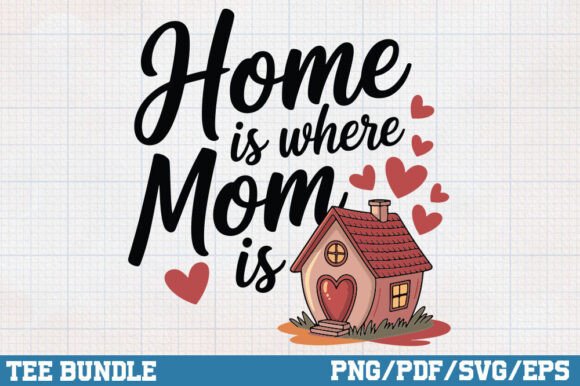
When you first open a file called Home is Where Mom is, Mom Love, Mother, you expect a certain warmth. This design delivers exactly that—a soft, heartfelt typographic composition that feels like it belongs on a well-loved kitchen towel or a tote bag carried to the farmer’s market. It’s not a machine embroidery file out of the box; it’s a high-quality graphic, supplied as PNG, EPS, SVG, and PDF. For anyone who digitizes their own embroidery, that’s a meaningful starting point. The crisp 4500×5400 pixel PNG at 300 dpi and the scalable vector formats give you a clean blueprint to work with, and that matters more than most people realize when you’re about to turn a sentimental phrase into stitches.
I’ve tested plenty of mom-themed designs, and this one sits in a sweet spot between elegant and approachable. The lettering has a gentle handwritten character—not too ornate, not too chunky—and the layout feels balanced. The phrase “Home is Where Mom is” carries the emotional weight, while “Mom Love” and “Mother” add a layered, almost poetic rhythm. That multi-line structure opens up possibilities for color blocking, appliqué accents, or even a subtle tone-on-tone look. The mood is nostalgic without being dated, and that’s a big deal when you’re trying to create a product that buyers will actually want to purchase for themselves or as a gift.
First Look: Sentiment That Stitches Well
The visual personality here is unmistakably cozy. I picture it on a cream linen pillow cover, stitched in a soft charcoal or dusty rose thread. The curves in the lettering suggest a flowing script, but the spacing looks generous enough to avoid the dreaded “thread blob” effect you get when letters are too tight. That’s critical for machine embroidery. If you’re planning to digitize this, you’ll appreciate that the thinnest strokes aren’t so delicate that they’ll disappear on textured fabric. The design doesn’t overwhelm you with extraneous flourishes; it stays focused on the words, which means fewer tiny details to worry about when you’re tweaking stitch angles and pull compensation.
Real Embroidery Scenario: A Mother’s Day Tote
Let’s walk through a practical project. I recently prepared a batch of custom embroidered canvas tote bags for a small boutique’s Mother’s Day collection. The shop owner wanted something that felt personal but not overly cute. I pulled up the SVG file of Home is Where Mom is, Mom Love, Mother in my digitizing software and traced the lettering into a satin-stitch base with a light fill stitch for the thicker parts. The design scaled beautifully to about 5 inches wide, fitting a 6×10 hoop with room to spare. On a natural cotton canvas, the stitches sat cleanly without sinking into the weave. I used a medium-weight cutaway stabilizer, and the result was crisp enough to photograph well for Etsy listings. The reaction from customers was immediate—several people commented that the phrase “felt like home,” which is exactly the kind of emotional response you want to spark with a handmade product.
Where This Design Shines
I can see this design working effortlessly across a range of products. For custom apparel, it’s a natural fit on slouchy sweatshirts, long-sleeve tees, and even unisex hoodies. The lettering style is neutral enough to appeal to a broad audience, and the “Mom Love” and “Mother” elements mean you can market it year-round—not just for Mother’s Day. On baby items, the design takes on a softer tone; a tiny version on a onesie or a baby blanket instantly becomes a keepsake. Tea towels, aprons, and pillow covers are my go-to for this kind of sentimental typography because they’re low-risk fabric surfaces that show off the stitches beautifully. If you’re a craft fair seller, you could easily stitch this onto a simple flour sack towel and sell it for a premium simply because the message connects with people.
For those who sell digital products, the high-resolution PNG and PDF are already print-ready for wall art, printable mockups, and POD listings. But if you’re an embroidery designer, you’ll want to use the vector files as your digitizing base. The EPS and SVG are editable, so you can adjust the size, break apart the words, or even change the color before you start assigning stitch types. That flexibility is a huge time-saver.
Fabric and Hoop Considerations
Not every fabric plays nicely with this kind of design. On stretchy materials like performance tees or thin ribbed knits, the lettering could distort if you don’t stabilize correctly. I’d avoid using it on very small hoop sizes unless you’re willing to simplify the text. The phrase “Home is Where Mom is” is the longest line, and at under 4 inches wide, the serif-like details might start to close up. Dark fabrics demand extra attention—light thread colors like white, cream, or pastel pink will pop, but you’ll need to test for show-through. A dark backing stabilizer can help. Textured fabrics like terry cloth or fleece can swallow the fine curves, so I’d stick to smooth cotton, linen, or polyester blends for the most professional result.
Curved surfaces, such as caps or the corner of a zippered pouch, require careful placement. The multi-line layout means you’ll need a flat enough area to keep the words readable. If you’re embroidering on a cap, I’d recommend using the center front panel and positioning the design as a single-column block rather than trying to bend it around the side. That way, the lettering stays crisp and the customer sees the full message without any awkward stretching.
From Graphic to Embroidery: Digitizing Notes
Since Home is Where Mom is, Mom Love, Mother arrives as a graphic file, the first step is turning it into a stitch file. The SVG format is your best friend here. Import it into your digitizing program, and you’ll have clean vector paths to trace. I always start by analyzing the letter thickness. The main phrase has a comfortable weight for a satin stitch, but the smaller “Mom Love” and “Mother” accents might need a slightly wider column to avoid brittle, thin satin columns. I’d test a section of the “M” and “o” on scrap fabric first, adjusting the stitch density and pull compensation until the edges are smooth without puckering.
Running stitch underlays are essential for this design, especially on the longer words. They prevent the fabric from shifting and keep the edges of the satin stitch from sinking. I also like to add a light fill stitch behind the larger letters if I’m working on a fabric that tends to show bobbin thread. For the most verson, digitize the design in a way that allows you to change thread colors easily—you might want to offer it in a classic monochrome, or split the words into complementary shades for a more custom look.
Color and Contrast That Work
Thread color choices can make or break this design. On a natural linen base, I’ve had great results with deep olive, navy, and warm terracotta. On white or ivory fabric, a soft charcoal or espresso brown feels elegant and timeless. If you want to lean into the “Mom Love” theme, a dusty rose or muted coral adds a gentle pop without being too sugary. Avoid neons or overly bright threads unless you’re targeting a very specific, youthful audience. The design’s strength is its emotional restraint, so the thread color should support that. I always recommend testing the design in a black-and-white mockup first—it forces you to see the contrast and spacing without the distraction of color, and that’s where you’ll catch any potential stitching issues.
Market Appeal for Craft Sellers
From a small business perspective, this design ticks a lot of boxes. Sentimental home and family themes sell consistently across Etsy, craft fairs, and boutique shops. The phrase “Home is Where Mom is” has strong SEO potential for handmade gifts, and the addition of “Mom Love” and “Mother” gives you room to tag the product in multiple ways. It’s the kind of design that works as a standalone statement piece, so you don’t need to add extra embellishments to make it marketable. That simplicity translates to faster production times and fewer thread breaks, which directly impacts your bottom line.
If you’re creating digital embroidery design packs, you could easily pair this with a coordinating floral motif or a simple heart accent. Just keep the overall composition clean so the typography remains the hero. For commercial use, check the licensing terms that come with the graphic. Since the product description doesn’t specify an extended license, I’d recommend confirming that you can sell finished items stitched from a digitized version of this artwork. Most graphic bundles allow physical product creation, but it’s always wise to double-check before you list anything.
Practical Tips Before You Stitch
Run a full test on the exact fabric you plan to use. I can’t emphasize this enough. Even if the design looks perfect on screen, the real test is how it stitches out. Use a medium-weight cutaway stabilizer for woven fabrics and a no-show mesh stabilizer for knits. If you’re working on a dark garment, place a piece of fusible polymesh behind the design to prevent the shirt color from grinning through the stitches. Watch the small details—the dot of the “i,” the loop of the “e,” and the connection between the words “Mom Love.” These are the spots where thread breaks or misalignment can sneak in.
Hoop size is another thing to verify early. For the full phrase, a 5×7 or 6×10 hoop gives you breathing room. If you’re scaling it down for a baby bib or a patch, I’d simplify the lettering slightly to maintain clarity. Always keep a stitched sample on hand to show customers, and photograph it in natural light so the texture and thread sheen come through. That’s what builds trust and sells the final product.
When You Want It to Feel Like Home
There’s a reason designs like this stay in heavy rotation. They’re not flashy, but they’re deeply resonant. Home is Where Mom is, Mom Love, Mother delivers a message that feels personal, versatile, and genuine. As a graphic, it’s already print-ready for wall art and POD projects. As an embroidery starting point, it gives you a clean, editable foundation to build a stitch file that you can confidently use on sweatshirts, totes, pillows, and more. The only thing you need to bring is your digitizing skill and a thoughtful fabric choice—and maybe a cup of tea while you test stitch, because this one is all about the comfort of home.